The Mata Vaishno Devi Shrine: An In-Depth Exploration
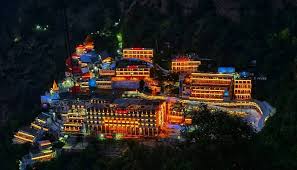
Mata Vaishno Devi Shrine, located in the Trikuta Mountains of the Jammu region, is one of the most revered Shakti Peethas in the world. Millions of devotees undertake the Yatra each year to seek blessings from the Divine Mother, who resides in a natural cave not as an idol, but as three self-manifested rock formations known as Pindies. This unique form of worship distinguishes the shrine as one of the most spiritually significant sites in Indian tradition. Historical Evolution: From Vedic Roots to Modern Glory Ancient Mentions and Early Traditions References to the divine energy residing in the Jammu hills appear in several ancient sources. The Mahabharata describes Arjun meditating upon a mountain goddess in this region before the Kurukshetra war. Tantric texts also identify the Trikuta hills as a powerful center of Shakti, drawing sages and seekers long before the shrine became widely known. The Legend of Pandit Sridhar Around seven centuries ago, a pious Brahmin named Pandit Sridhar lived in the village of Hansali near Katra. According to tradition, the Goddess appeared before him in the form of a young girl and requested that he host a large community feast. Despite his poverty, the event succeeded miraculously, after which the divine child disappeared.Overcome with devotion, Sridhar searched for her. It was then that the Goddess revealed her true form and guided him to the sacred cave, marking the beginning of the shrine’s known spiritual history. The Shrine Board Era A major transformation occurred in 1986 with the creation of the Shri Mata Vaishno Devi Shrine Board. Prior to this, the mountain path was narrow and difficult to navigate. The Board modernized the Yatra route with paved tracks, lighting, shelters, sanitation systems, medical facilities, and security measures. This large-scale development is often described as a “Kaya-kalp,” or rebirth, of the pilgrimage corridor. Core Beliefs: The Story of Bhairav Nath The central mythology of the shrine revolves around the Goddess’s encounter with the tantric Bhairav Nath, whose pursuit of her ultimately led to his spiritual transformation. Banganga During her journey into the mountains, the Goddess shot an arrow into the ground to create a water spring for her devotee Hanuman. This place, known as Banganga, marks the formal beginning of the Yatra. Charan Paduka Further up the path lies the rock bearing the imprint of the Goddess’s footsteps, believed to have formed when she paused and looked back at Bhairav Nath. This site symbolizes her vigilance and protection. Ardhkuwari The Goddess meditated for nine months inside a narrow cave called Garbh Joon at Ardhkuwari. The cave resembles the shape of a womb, symbolizing protection and rebirth. When Bhairav Nath approached her here, she escaped through an opening at the cave’s rear. The Final Encounter At the present-day holy cave, the Goddess manifested as Mahakali and ended the physical form of Bhairav Nath. In his final moments, Bhairav sought forgiveness. The Goddess blessed him with liberation and granted that no pilgrimage to her shrine would be considered complete without visiting his temple at Bhairav Ghati. Location and Geography The shrine is situated at an altitude of approximately 5,200 feet (1,585 meters).The Trikuta mountain range consists of three distinct peaks, from which its name is derived. The original cave is nearly 98 feet long, naturally shaped, and contains the Pindies and a small internal water stream. Due to large crowds, two modern tunnels now manage pilgrimage flow, while the original cave is opened during low-rush winter periods. Spiritual Importance: The Three Pindies Inside the cave, the Goddess is present in the form of three natural rock formations known as Swayambhu Pindies. They represent the three fundamental forms of the Divine Mother: Maha Kali – black in color, symbolizing discipline, power, and the destruction of negativity.Maha Lakshmi – reddish-yellow in hue, representing prosperity, courage, and vitality.Maha Saraswati – whitish in appearance, representing wisdom, purity, and creativity. Together, they express the unity of the three Gunas—Tamasic, Rajasic, and Sattvic. Daily morning and evening Aartis are performed inside the cave with strict Vedic procedure, involving conch blowing, fire offerings, and Sanskrit recitations. These rituals are considered among the most spiritually charged ceremonies in India. Timelines and Best Time to Visit NavratriBoth Chaitra (March/April) and Sharad (September/October) Navratri witness the highest influx of devotees. The entire route is decorated with flowers and special arrangements. Summer (April–June)Pleasant weather and ideal conditions for families. Autumn (September–November)Clear skies, cool breezes, and good mountain visibility. Winter (December–January)The region experiences snowfall, creating a peaceful environment with fewer crowds and shorter waiting times for Darshan. Route and Access: The Yatra The pilgrimage begins in the town of Katra, approximately 50 km from Jammu. Key Points Along the Trek Banganga: Check-post and traditional starting point.Charan Paduka: Site of the divine footprints.Ardhkuwari: Midpoint and location of the womb-shaped cave.Sanjhichhat: Highest point of the trek with a helipad and rest facilities.Bhawan: The main shrine complex. Facilities and Assistance Battery-operated vehicles (on Tarakote Marg) Ponies and palkis Helicopter services from Katra to Sanjhichhat Ropeway from the Bhawan to Bhairav Temple Resting shelters, water points, medical units, accommodation, and food stalls Tarakote Marg This newly developed pathway is gentler and better suited for families, senior citizens, and those seeking a cleaner, pony-free route. It offers scenic valley views and modern amenities. Essential Requirements and Safety Measures Yatra Registration:Every pilgrim must obtain a Yatra Parchi or RFID tag from Katra. Without it, entry past the first check-post is not allowed. Restricted Items:Mobile phones, cameras, leather items, tobacco, and packaged snacks are prohibited at the Bhawan. The Shrine Board provides free locker services. Health Considerations:The climb is steep in parts. People with knee or heart issues should avoid narrow stair routes and instead use the Tarakote path or transport services. Completing the Yatra:After visiting the main shrine, devotees are expected to visit the Bhairav Temple. The recently installed ropeway makes this part of the Yatra significantly easier.
The Psychology Behind Memes

Do Screens Affect Sleep More Than We Think?

Why Digital Minimalism Is Becoming Popular

Guess It If You Can!

Brain Boost Challenge

Think Fast Quiz

Seven Minutes After Midnight

When the Rain Forgot to Fall

The Last Letter on the Table